Shared account language
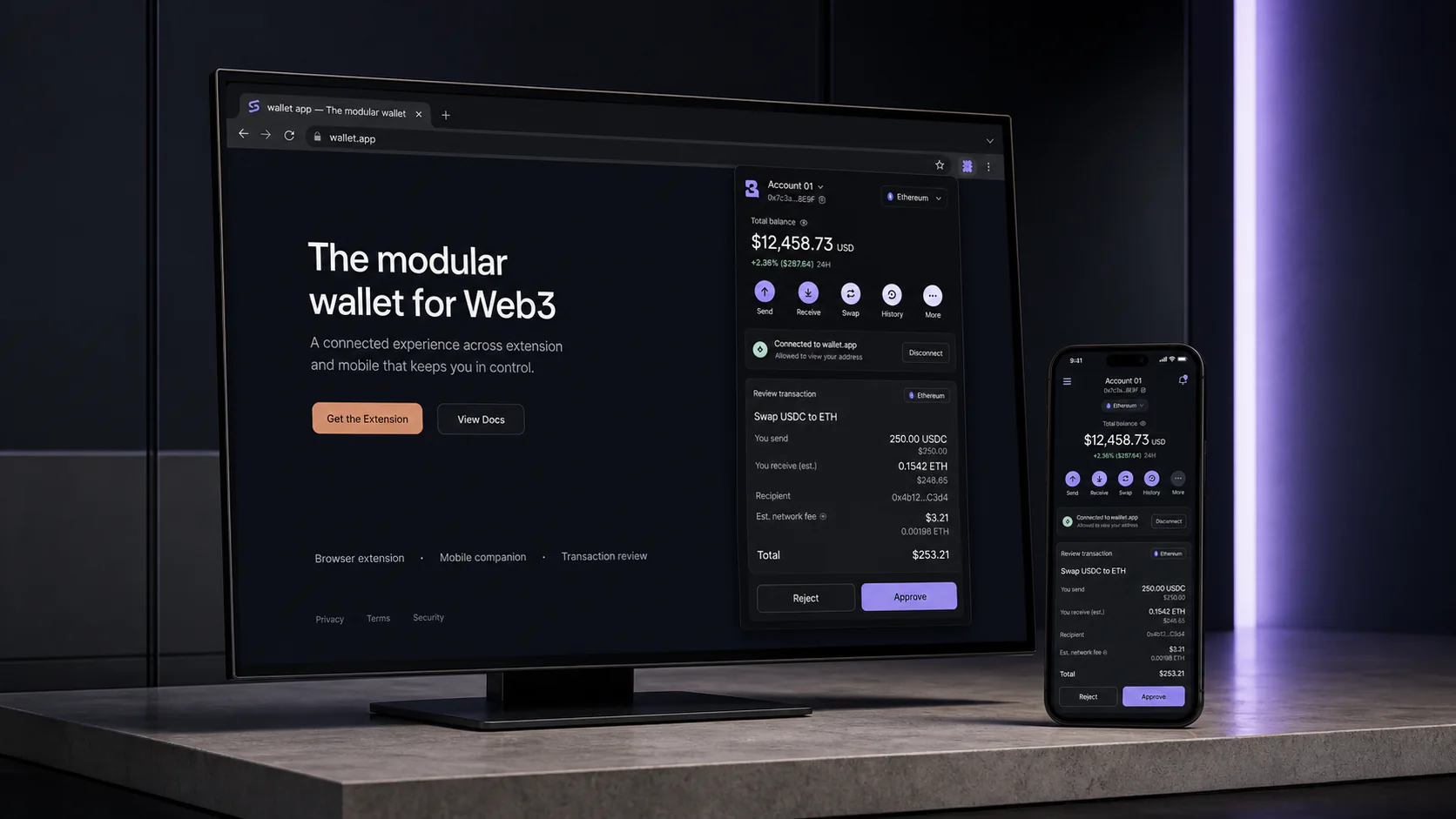
A Manifest V3 extension and Flutter mobile companion shared account and activity concepts across two product surfaces.
Our Global Presence
Signavale · Connected wallet
Signavale began as a browser proof of concept with a separate mobile direction. The product needed one language for accounts, connected applications, permissions, activity, and transaction decisions.
Delivered project
This case study covers a real UnicornX project and the product system delivered around it.
This case study covers a real UnicornX delivery. The interface, scope, technology, and operating decisions below reflect the work completed for Signavale.
Project scope
The work combined product flows with the backend state, integrations, permissions, payments, and operating tools needed to make the experience coherent.
A Manifest V3 extension and Flutter mobile companion shared account and activity concepts across two product surfaces.
Permission and activity flows gave connected applications an understandable boundary around account access.
Review journeys exposed recipient, asset, network fee, and total before a user approved a transaction.
Reference frame
“Security work is where most agencies slow down. UnicornX got faster. The extension, the mobile companion, and the shared accounts layer all shipped in the same release window.”
Have a related product in mind?
Tell us about the account model, the connected-app surface, and the release window. We can review the architecture or join the build.
Discuss your project